What Is Spravato and How Does It Work?

Roughly 1 in 3 individuals with major depression do not improve after trying two or more standard antidepressants. For that group, ordinary treatment plans can start to feel like a series of dead ends. Spravato entered the picture as something genuinely different: the first depression medication in decades to act through a separate pathway in the brain than the pills most individuals have already tried, and one of the few with the potential to ease symptoms within hours rather than weeks.

Understanding what it is, how it works inside the brain, and what a treatment session looks like can make it easier to judge whether this option is worth raising with a healthcare provider.

What Is Spravato?

Spravato is the brand name for esketamine, a prescription nasal spray used to treat certain forms of depression in adults. Esketamine is the more potent form of the ketamine molecule, delivered into the nose so it absorbs through the nasal lining and into the bloodstream.

Each device delivers 28 mg of medication in two sprays. Because of its effects and its potential for misuse, Spravato is classified as a Schedule III controlled substance and is given only in a certified medical setting, never dispensed for use at home.

What Does Spravato Treat?

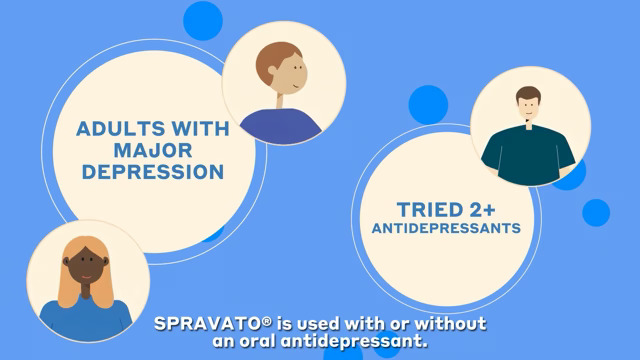
Spravato has two FDA-approved uses, both in adults. The first is treatment-resistant depression, meaning major depressive disorder (MDD) that has not improved after at least two oral antidepressants. For this use, Spravato can be prescribed on its own or alongside an oral antidepressant. The second is depressive symptoms in adults with MDD who are experiencing acute suicidal thoughts or behavior, where it is used together with an oral antidepressant.

It's worth being clear about what this second use does, and doesn't, mean. Spravato hasn't been shown to prevent suicide or reduce suicidal thoughts or behavior on its own, and starting treatment doesn't rule out the need for hospitalization if that's what someone's care team decides is necessary, even if symptoms start to improve after the first dose.

Outside of those indications, Spravato is not FDA-approved for other conditions. It is not a first-line treatment, and it is not approved for anxiety, even though anxiety and depression often occur together. A provider generally considers it only after other antidepressants have been tried without adequate relief. For the individuals it does fit, it can widen what recovery looks like, and anyone weighing it can talk with a psychiatric provider about whether esketamine therapy aligns with their history, symptoms, and goals.

Take Our Quick and Easy Depression Questionnaire

Take Our Quick and Easy Depression Questionnaire

Major depressive disorder affects millions of people across all age groups. Take this assessment to identify symptoms commonly associated with depression and understand if you may be suffering from clinical depression.
In the last two (2) weeks, how often have you been bothered by any of the following problems?

How Does Spravato Work?

Most antidepressants act gradually on serotonin, norepinephrine, or dopamine. Spravato works on a different chemical messenger altogether. A review of glutamate-targeted antidepressants describes glutamate as the brain's most abundant neurotransmitter and a central player in how neurons build new connections, with measurable differences in glutamate signaling between people with and without depression.

Esketamine blocks NMDA receptors, a type of glutamate receptor. That blockade triggers a brief surge of glutamate, which activates a different type of receptors known as AMPA receptors, and sets off a cascade that strengthens and rebuilds synaptic connections in mood-regulating regions of the brain. Many researchers believe this rapid boost to synaptic plasticity is what may allow symptoms to lift faster than they do with traditional medication, although the full mechanism is still not completely understood.

Is Spravato the Same as Ketamine?

Spravato and ketamine are closely related but not identical. Esketamine is the S-enantiomer, one of the two mirror-image halves, of the ketamine molecule. Both compounds share the same core mechanism as NMDA receptor antagonists, which is part of why their risk profiles overlap.

Many people have first heard of Spravato described as a “ketamine nasal spray,” and while that nickname is understandable, it is not quite accurate. The shorthand blurs an important distinction: Spravato is the specific, FDA-approved esketamine formulation, while plain ketamine is an older anesthetic that has never been approved as a nasal spray for depression.

The practical differences, though, are large. Spravato is an FDA-approved, standardized nasal spray with a defined dose and a built-in safety program. Ketamine used for depression is typically given off-label as an intravenous infusion or a compounded preparation, sometimes marketed as a compounded ketamine nasal spray, without the same regulatory oversight or dosing standards.

For individuals comparing rapid-acting options, it may also help to see how Spravato lines up against TMS, a non-medication approach to stubborn depression.

What to Expect During Spravato Treatment

Spravato is always taken in a doctor's office or clinic, never at home. Individuals spray the medication themselves under direct observation and then stay to be monitored. Under the FDA's restricted REMS program, a healthcare provider must watch each individual for at least two hours after every dose, checking for sedation, dissociation, and changes in blood pressure before clearing them to leave.

Because the medication can cause drowsiness and a temporary sense of detachment, individuals cannot drive afterward and need to arrange a ride home. A typical course begins with an induction phase of two sessions per week for the first four weeks, then tapers to weekly or every-other-week maintenance sessions based on how a person responds.

Because every dose must be given in a REMS-certified setting, access often depends on whether a certified clinic is within reach. With more than 500 locations across the country, LifeStance is well positioned to make Spravato therapy available to individuals in 15 states, with trained providers handling administration and the required two-hour monitoring on site.

How Long Does Spravato Take to Work?

Spravato is considered a rapid-acting antidepressant, and some people notice a lift in mood within the first day or week rather than the month or more that oral medications often require. Onset varies from person to person, so a provider usually evaluates the response over the first several sessions before settling on a long-term plan.

Spravato Side Effects

Most side effects are tied to the first couple of hours after a dose and tend to ease before the observation period ends. The most common include:

  • Dissociation: a temporary feeling of being detached from oneself or one's surroundings.
  • Dizziness and vertigo: a spinning or off-balance sensation in the hours after dosing.
  • Sedation: drowsiness that makes driving unsafe until the next day.
  • Nausea: sometimes with vomiting, usually mild and short-lived.
  • Increased blood pressure: a transient rise that staff track throughout the session.

The more serious risks are the reason for the in-office monitoring requirement: heavy sedation, significant blood pressure spikes, and, in rare cases, slowed breathing. Like other antidepressants, Spravato carries a boxed warning about an increased risk of suicidal thoughts in some children and young adults, and is not recommended during pregnancy. A provider also screens for conditions, such as certain cardiovascular problems, that can make the medication unsafe.

Is Spravato Right for You?

Treatment-resistant depression is not the end of the road, and a certified clinic is where that next conversation can start.

Find a Spravato treatment center near you.

Spravato is prescribed only when clinically appropriate and should be used only under the supervision of a qualified healthcare provider.

Get Expert Mental Health Insights & Tips

Authored By 

Emily Econie, MS, PMHNP

Emily Econie is a Psychiatric Mental Health Nurse Practitioner in California who has been practicing since 2021. She has a Bachelor of Arts in Psychology and Master of Science in Homeland Security from San Diego State University and a Bachelor...


Reviewed By

Jessica Lane Clark, DNP, PMHNP
Jessica Clark is a Board-Certified Psychiatric Mental Health Nurse Practitioner in Georgia who has been practicing since 2021. She earned a DNP, PMHNP-BC at Augusta University. Jessica has been honored to deliver the very best evidence-based care with warmth and compassion. She collaborates with clients to achieve their personal goals. Jessica recognizes that each person has a unique experience and provides care with an understanding of their individuality. She is LGBTQIA+ affirming, sex-positive, and practices with a holistic focus. Outside of work, Jessica enjoys reading, gardening, food, and family.