

Faster Relief for Depression Starts with Spravato® in Wisconsin?
At LifeStance Health, we provide compassionate care and deep clinical expertise in Spravato® (esketamine) treatment for adults living with treatment-resistant depression (TRD) and major depressive disorder (MDD). Spravato® treatment is available at multiple LifeStance mental health clinics throughout Wisconsin, where our multidisciplinary team of psychiatric providers delivers personalized support at every step — from your initial evaluation through each in-office treatment session. If depression hasn’t improved with antidepressants alone, Spravato® may help. Take the first step toward mental well-being and schedule your Spravato® treatment appointment today.
Spravato® Treatments At LifeStance


Find a Spravato® Provider Near You:
 Filter Provider Results
TMS Therapy is Often Covered by Insurance. We accept 48+ Insurances in Wisconsin






Spravato® Therapy in Wisconsin FAQ
Researchers believe Spravato works to treat depression by targeting the NMDA receptor and glutamate neurotransmitter system in your brain. Scientific studies have illuminated the importance of NMDA/glutamate in modulating mood, behavior, memory, and learning.
Yes. Spravato was approved by the FDA in 2019. It is under patent until 2024, after which there will likely be generic equivalents on the market.
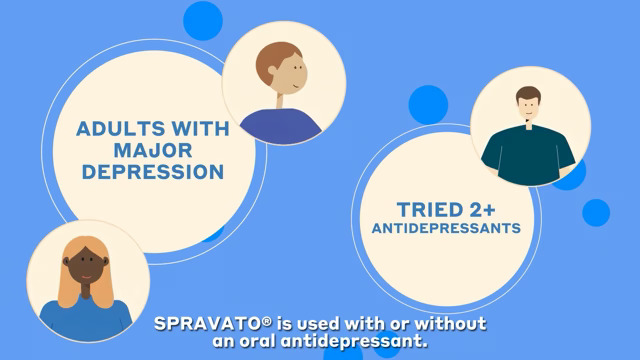
No. Spravato should be taken in conjunction with an oral antidepressant. Insurance companies require a patient to be prescribed an oral antidepressant prior to approving treatment coverage. Spravato is intended to supplement but not replace your current anti-depression treatment.
Research studies show an efficacy of 33-60% depending on the duration of treatment.
Addiction to or physical dependence on Spravato was not found in over 1700 patients included in clinical trials. It is unlikely that Spravato taken at the doses and frequency used to treat mood symptoms will lead to any dependence or addiction.
Yes. The efficacy of Spravato has been evaluated in short-term clinical trials and one longer-term maintenance-of-effect trial. In one of the short-term studies, Spravato demonstrated a statistically significant effect on the severity of depression. In the maintenance trial, patients who continued treatment with Spravato plus an oral antidepressant experienced a statistically significant longer time to relapse of depressive symptoms.
In a clinical trial for Spravato, 65% of patients responded to treatment, achieving a 50% or greater reduction in depressive symptoms and 32% were in remission, these patients did not meet criteria for depression. In addition, patients who had responded to Spravato were 71% less likely to relapse if they continued the medication and if they had been in remission, they were 51% less likely to relapse.
